
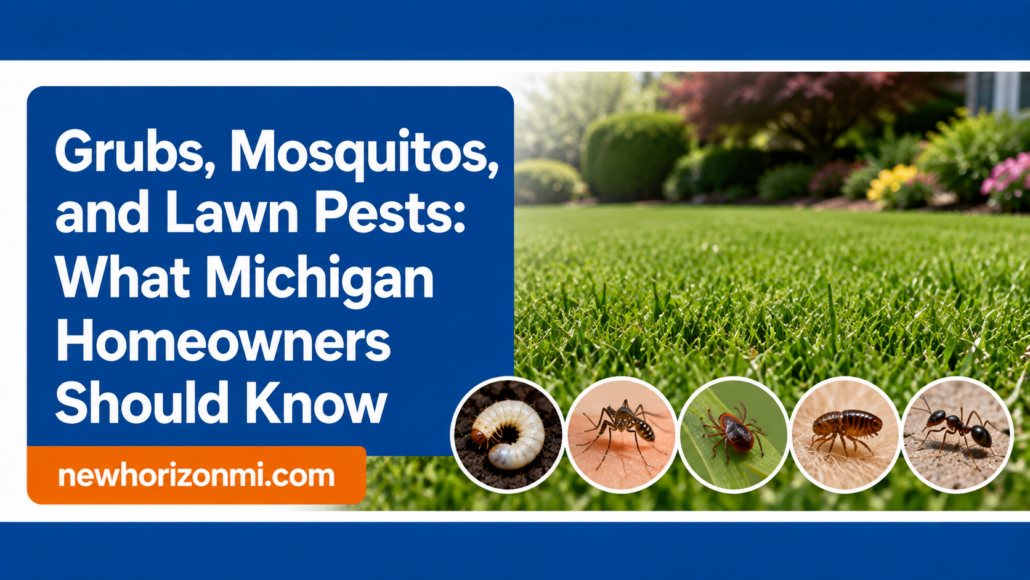
Grubs, Mosquitoes, and Lawn Pests: What Michigan Homeowners Should Know
A beautiful Michigan lawn can be the perfect place for backyard barbecues, family gatherings, pets, and relaxing summer evenings. Unfortunately, we’re not the only ones who enjoy spending time there.
Grubs can quietly damage turf from below, mosquitoes can make evenings outdoors miserable, and ticks, fleas, ants, and other pests can turn your yard into a less comfortable place for your family and pets.
The challenge is that lawn pests don’t all behave the same way. Some damage your grass, while others simply use your lawn and landscaping as a place to live and reproduce.
Knowing what to watch for—and when to take action—can help protect both your lawn and the time you spend enjoying it.
1. Grubs: The Pest You May Not See Until the Damage Is Done
Grubs are the immature stage of several types of beetles. Unlike pests crawling across the surface, grubs live underground and feed on grass roots.
That’s what makes them particularly troublesome: by the time you notice something is wrong, significant root damage may already have occurred.
Signs of grub damage include:
- Irregular brown or thinning patches
- Grass that wilts despite adequate moisture
- Turf that pulls up easily because the roots have been damaged
- Skunks, raccoons, birds, or other animals digging in the lawn
Late summer into fall can be an important time to watch for grub activity in Michigan lawns as young grubs feed near the soil surface.
Prevention Makes a Difference
Grub control is largely about timing. Preventative treatments are most effective when applied at the appropriate point in the pest’s life cycle rather than waiting until large areas of turf are already damaged.
That’s one reason a professional lawn program can be valuable: treating the right pest at the right time is just as important as choosing the right product.
2. Mosquitoes: More Than an Annoying Backyard Guest
Few things can end a relaxing Michigan summer evening faster than mosquitoes.
Unlike grubs, mosquitoes aren’t eating your grass. Instead, they use areas around your lawn and landscaping for breeding and shelter.
Mosquitoes need water for their life cycle, and surprisingly small amounts can be enough.
Look around your property for water collecting in:
- Buckets and containers
- Bird baths
- Children’s toys
- Wheelbarrows
- Plant saucers
- Tarps
- Clogged gutters
- Low areas with poor drainage
Emptying unnecessary standing water is one of the simplest things homeowners can do to reduce mosquito breeding opportunities.
What About Mosquito Treatments?
Professional mosquito suppression targets areas where adult mosquitoes tend to rest, including shaded vegetation and landscaping.
Because new mosquitoes can continually enter your property, mosquito control is generally most effective as an ongoing seasonal program rather than a single treatment.
3. Ticks: Pay Attention Around Property Edges
Ticks are another pest Michigan homeowners should keep on their radar.
They’re particularly associated with areas where lawns meet:
- Woods
- Brush
- Tall vegetation
- Leaf litter
- Overgrown landscape areas
Keeping grass maintained, cleaning up leaves and brush, and maintaining defined edges between recreational lawn areas and wooded or overgrown spaces can help make your property less inviting to ticks.
If your family or pets regularly spend time near wooded portions of the property, checking for ticks after being outdoors is also a smart habit.
4. Fleas: Your Pets Can Bring the Problem Indoors
Fleas aren’t just an indoor problem.
They can be present in outdoor areas where animals spend time and may eventually hitch a ride indoors on a pet.
If you have dogs or cats that frequently use your yard, pay attention to excessive scratching and other signs of flea activity. Wildlife moving through the property can also contribute to outdoor flea populations.
Maintaining your lawn and treating appropriate outdoor areas can be one part of a broader flea-control strategy.
5. Ants and Other Lawn Insects
Seeing an occasional ant or insect in your yard doesn’t automatically mean you have a pest problem. In fact, a healthy landscape naturally supports many insects—including beneficial species and important pollinators.
The goal shouldn’t be to eliminate every insect from your property.
Instead, pest management should focus on insects that are causing damage, creating significant nuisance problems, or presenting concerns for people and pets.
That’s where proper identification becomes important. A brown patch in your lawn, for example, isn’t automatically grub damage. Drought stress, disease, irrigation problems, and other conditions can create similar symptoms.
Healthy Lawns Are Better Equipped to Handle Stress
Pest control works best as part of an overall lawn care strategy.
A lawn that receives appropriate:
- Mowing
- Watering
- Fertilization
- Weed control
- Aeration and overseeding when needed
– is generally better prepared to withstand environmental stress and recover from minor damage.
This is also why simply treating an insect problem may not solve everything. If the lawn is already stressed from drought, poor soil, improper mowing, or another issue, those underlying conditions should be addressed too.
Should You Treat Lawn Pests Yourself?
Some prevention steps are easy for homeowners to handle. Removing standing water, keeping vegetation maintained, cleaning up leaves, and watching for signs of turf damage can all make a difference.
The difficulty comes when you need to determine:
What pest is causing the problem? When should it be treated? Where should treatment be applied?
Applying the wrong product—or treating at the wrong time—can waste money without solving the problem.
Professional pest control allows the treatment strategy to be matched to the pest, property, and time of year.
Don’t Wait Until Lawn Pests Take Over
Michigan’s changing seasons create different pest pressures throughout the year. Knowing what to watch for can help you catch problems early and protect both the health of your lawn and your enjoyment of your property.
At New Horizon Property Management, our lawn care team provides professional pest control services for grubs, mosquitoes, ticks, fleas, and ants, along with comprehensive lawn care services designed for Michigan properties.
Our seasonal pest control program typically includes multiple applications spaced throughout the growing season, helping provide ongoing protection when pests are most active.
Seeing signs of pests—or simply tired of sharing your yard with mosquitoes? Contact New Horizon Property Management today to learn more about our lawn pest control services.

