
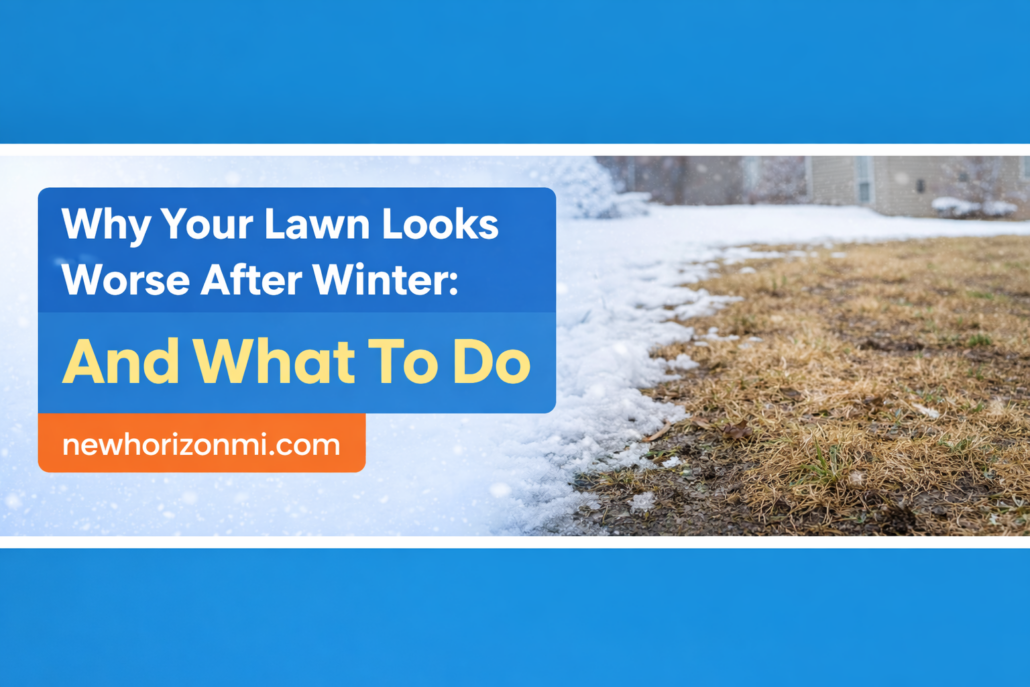
Why Your Lawn Looks Worse After Winter (And What To Do)
Winter can be tough on your lawn—especially here in Michigan. As the snow melts and temperatures rise, many homeowners are surprised to find their once-green yard looking patchy, brown, or even lifeless.
If your lawn looks worse after winter, don’t worry—you’re not alone. The good news is that most winter damage is completely fixable with the right approach.
Let’s break down why this happens and what you can do to bring your lawn back to life.
Why Your Lawn Looks Bad After Winter
1. Snow Mold and Fungal Growth
When snow sits on your lawn for long periods, it creates a damp environment where fungi can grow. This often shows up as:
- Gray or pink patches
- Matted, flattened grass
- Circular dead-looking spots
2. Salt Damage from Snow Removal
If you use salt on driveways or sidewalks, it can easily spread onto your lawn. This leads to:
- Yellow or brown edges near pavement
- Burned or dehydrated grass
3. Compacted Soil
Heavy snow and foot traffic can compress your soil over winter. When soil is compacted:
- Roots struggle to grow
- Water and nutrients can’t penetrate
- Grass becomes thin and weak
4. Winter Kill
Extreme cold temperatures without adequate snow cover can kill grass completely. You may notice:
- Large dead patches
- Grass that doesn’t come back in spring
5. Debris and Thatch Buildup
Leaves, sticks, and leftover debris from fall can smother your lawn, blocking sunlight and airflow.
What To Do to Restore Your Lawn
The key to recovery is early action in spring. Here’s how to get your lawn back on track:
Step 1: Rake and Clean Up
Start by gently raking your lawn to:
- Remove debris
- Lift matted grass
- Improve airflow
This alone can make a big difference.
Step 2: Aerate the Soil
If your lawn feels hard or compacted, aeration is essential. It helps:
- Loosen the soil
- Improve root growth
- Allow nutrients to reach the grass
Step 3: Overseed Thin Areas
Bare or patchy spots won’t fix themselves. Overseeding helps:
- Fill in gaps
- Thicken your lawn
- Improve overall appearance
Step 4: Apply Fertilizer
A balanced spring fertilizer gives your lawn the nutrients it needs to recover and grow strong.
Step 5: Water Properly
As temperatures rise, make sure your lawn gets consistent moisture—but avoid overwatering.
Step 6: Address Problem Areas Early
If you notice persistent issues like fungus or severe damage, it’s best to act quickly before it spreads.
When to Call a Professional
While some lawn issues can be handled on your own, others require expert care. You may want professional help if:
- Large sections of your lawn are dead
- You’re dealing with recurring problems each year
- You want faster, more consistent results
At New Horizon Property Management, we specialize in helping homeowners restore and maintain healthy, beautiful lawns—no matter what winter leaves behind.
Get Your Lawn Back This Spring
A rough-looking lawn after winter doesn’t mean it’s ruined—it just means it needs the right care.
With proper attention and timing, your yard can bounce back greener and stronger than ever.
👉 Need help bringing your lawn back to life?
Contact New Horizon Property Management today to learn more about our lawn care and property maintenance services.

