
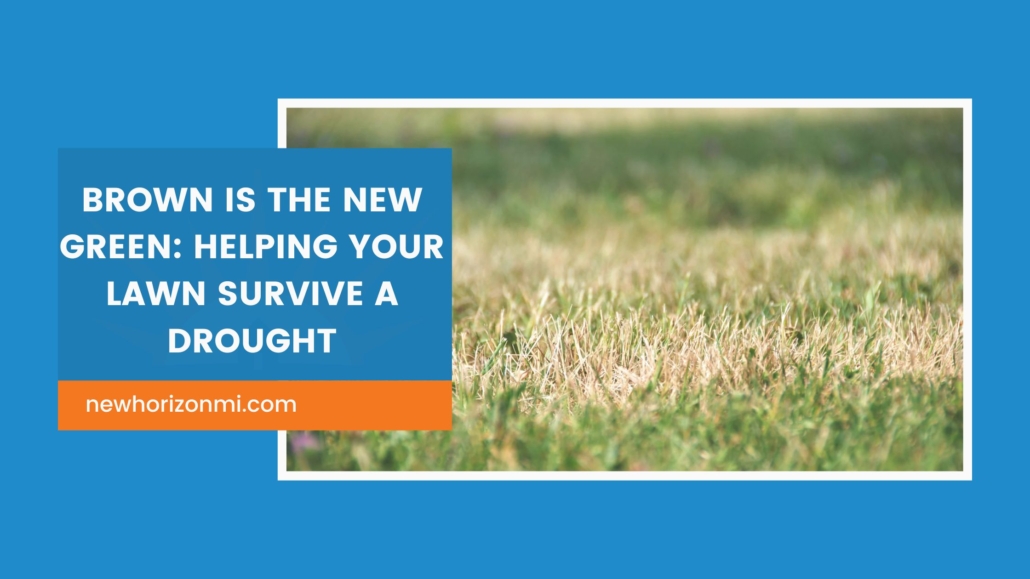
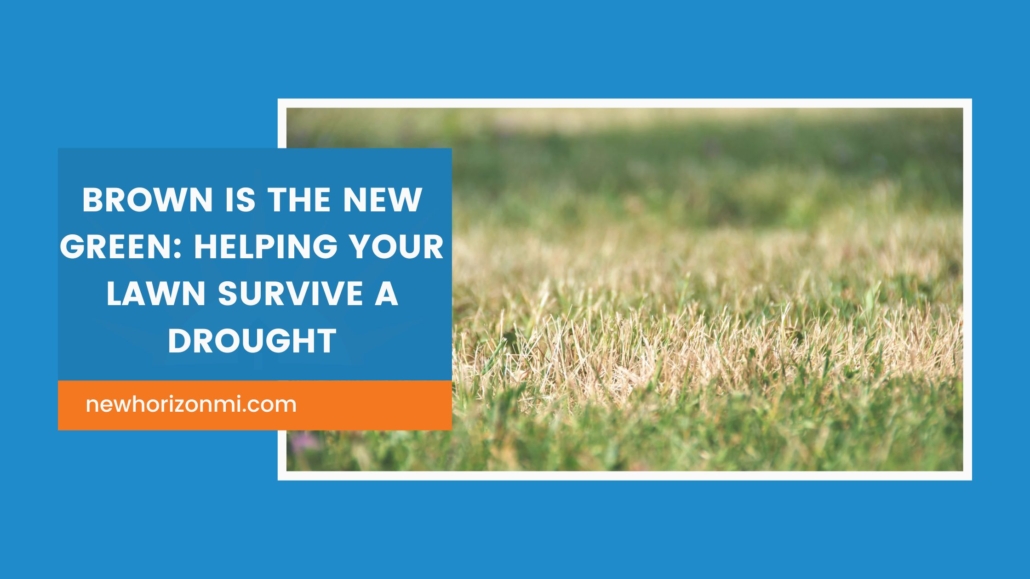
Brown is the New Green: Helping Your Lawn Survive a Drought
Michigan summers can bring heat, humidity—and sometimes, long dry spells that leave your once-green lawn looking more like a crispy brown patchwork. 😬 But don’t worry—brown doesn’t always mean dead.
When drought conditions hit, your lawn doesn’t need to be lush to be healthy. With a few smart adjustments, you can help your grass survive the dry season and bounce back when the rain returns.
☀️ Don’t Panic—Dormancy is Normal
First, let’s bust a common myth: brown doesn’t mean your grass is gone for good. Many cool-season grasses (like Kentucky bluegrass and fescue) naturally go dormant in extreme heat or drought. It’s their way of protecting themselves. The grass may look lifeless, but it’s conserving energy below the surface—waiting for moisture to return.
So if your lawn has gone brown, don’t rush to tear it up or overcorrect. Instead, focus on helping it survive the drought—not necessarily look perfect.
✂️ Mow Smarter, Not Shorter
One of the easiest drought survival tricks? Raise your mower blade.
Cutting your grass too short can expose the soil to direct sunlight, speeding up evaporation and stressing the turf. Instead:
- Set your mower height to 3.5 to 4 inches
- Leave the clippings on the lawn as natural mulch (they help hold in moisture)
Taller grass shades the soil, encourages deeper roots, and helps the lawn retain moisture longer.
💧 Water Wisely
When water is scarce, deep and infrequent watering is better than shallow, daily sprinkling.
- Aim for 1 to 1.5 inches of water once or twice a week
- Water early in the morning (before 10 AM) to reduce evaporation
- If local restrictions are in place, prioritize areas that need it most—like new sod or high-traffic spots
Avoid watering at night, which can invite fungal problems.
🚫 Skip the Fertilizer (for Now)
Feeding your lawn during a drought may seem helpful—but it can actually backfire. Fertilizer encourages growth, and your grass doesn’t need more stress when it’s already fighting to survive dry conditions. Wait until the weather improves to feed your lawn again.
🚶♂️ Limit Lawn Traffic
Dry, dormant grass is fragile. Minimize foot traffic, pets, and mowing when the lawn is stressed. Too much pressure can damage the turf and slow recovery later on.
🌧️ The Comeback is Real
Once rain returns and temperatures drop, your lawn should begin to green up again. Just be patient and avoid overwatering or fertilizing too soon. A little drought stress won’t ruin your yard—but the wrong response could.
Need Help? We’re Here for Your Lawn Year-Round
If you’re unsure what your lawn needs or how to tell dormancy from permanent damage, the team at New Horizon Property Management is here to help. We’ll assess your lawn and offer seasonal strategies to keep it healthy—even during tough weather.
📧 Contact us anytime at info@newhorizonmi.com, or call 269-558-8122.


Leave a Reply
Want to join the discussion?Feel free to contribute!